

How Arena Sand Impacts Performance and Safety for Equestrian Facilities
May 1, 2026
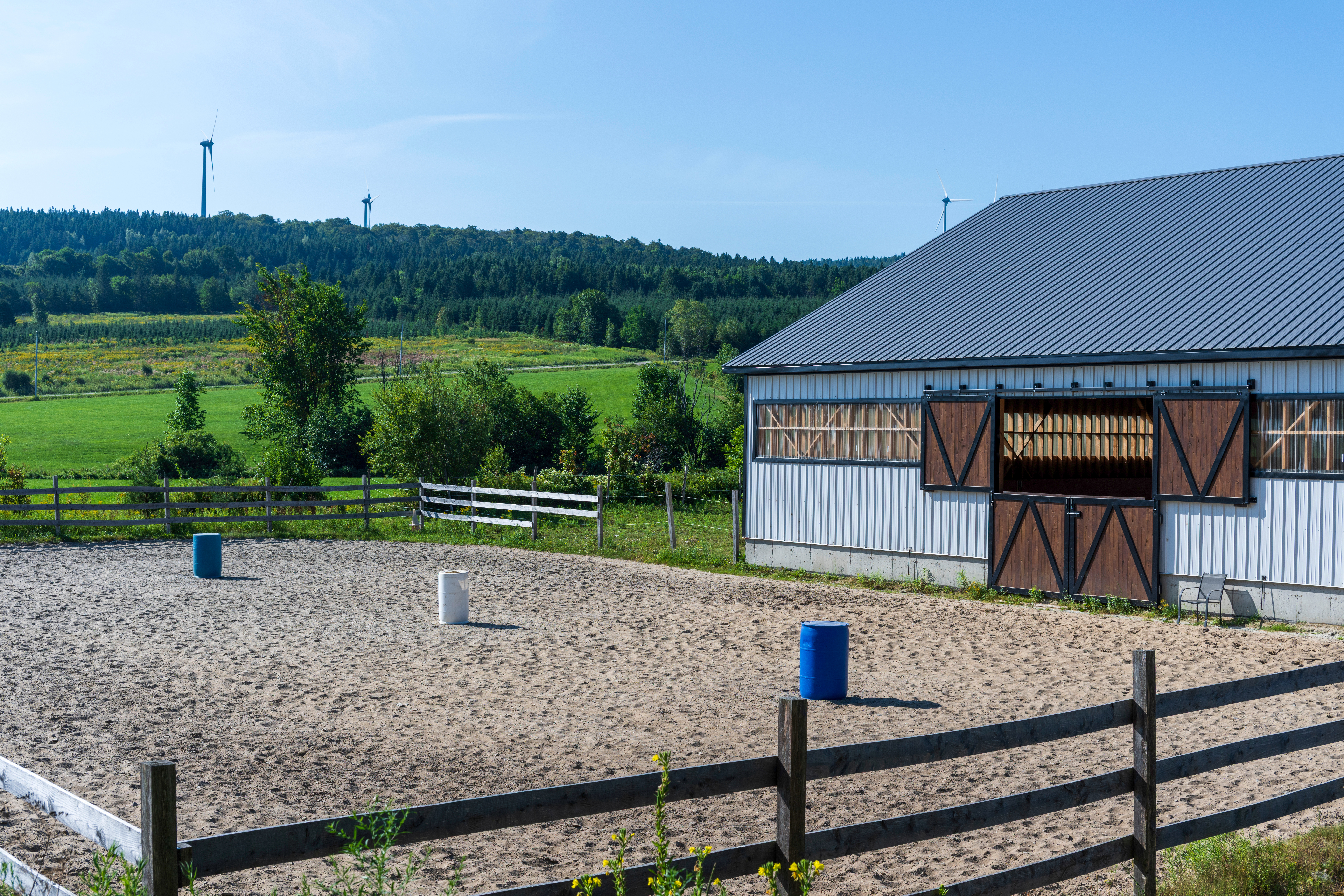
The quality of arena sand can make or break performance and safety for both horses and riders. Every stride in a working arena delivers two to three times a horse’s body weight into the surface, and how that sand absorbs, redistributes, or resists the impact determines traction, stability, and comfort. In Teton County, where winters freeze subgrades solid and summer heat dries footing into dust, choosing the right sand is critical. Arena sand is not just any sand; it is a carefully engineered material, with its gradation, angularity, and mineral composition directly influencing rider confidence and equine welfare.
Grain Shape Sets the Footing Response
Sub-angular grains lock together just enough to hold a hoof print without compressing into a hard slab beneath repeated passes. Round grains roll under pressure the way ball bearings slip against each other, which causes lateral instability through a pivot, while sharp crushed fines cement together when moist and trap energy that should transfer back into the stride. Sand pulled from the glacial and alluvial deposits along the Snake River and surrounding drainages carries naturally sub-angular profiles, which explains the traction horses feel on properly screened local material. Screening to a consistent gradation between roughly 0.1 and 0.6 millimeters keeps the footing responsive without bogging down fetlocks during deeper work.
Moisture and Fines Control Cushion and Dust
Water bound inside the grain matrix acts as the primary binding agent, holding the surface together during lateral work and reducing respirable particulate lofted by canter traffic. Silt and clay content above roughly five to seven percent will seal the surface when wet and release airborne dust when dry, so tightly graded arena sand limits passing fines through the wash process at the pit. Watering schedules tied to grain size hold moisture around eight to twelve percent by weight through riding hours. However, sand screened too coarse sheds water quickly and sand screened too fine ponds on the top inch. Washed sand from the Jackson pit strikes the middle ground that moves moisture through the profile without washing out the cushion layer underneath.
Base Construction Anchors Every Layer Above It
Below the footing sits the subgrade, and a compacted platform of crushed stone or road base carries the load the sand alone cannot. A woven geotextile layer placed between base and footing blocks migration of fines upward and sand downward, which preserves the designed depth through maintenance cycles and freeze-thaw seasons. Two to four inches of engineered sand sits above that separator, with depth chosen against discipline and hoof load rather than a single template. Drainage falls of roughly one percent toward a perimeter collector move snowmelt and rain off the base before freeze cycles lift or crack the surface.
Matching Sand Profiles to Discipline
Discipline drives specification, and the same base stockpile screens to different target curves depending on the work the surface will see. Dressage arenas call for finer, denser footing that holds a square halt and gives extension a consistent surface to push off of. Jumping and eventing rings run coarser and deeper, with sand sometimes blended with textile fiber to hold cushion through repeated takeoff impact, while reining and cutting pens lean on a slightly finer blend that releases cleanly during a slide stop. Turnout arenas and roping boxes require a footing that drains fast and compacts evenly under repeated traffic, which brings the specification back around to gradation and fines control.
Timing is everything when it comes to arena sand. In Teton County, seasonal changes can impact subgrade preparation and delivery routes, making it essential to plan ahead. Whether you’re building a new arena, refreshing existing footing, or preparing for competition season, Evans Construction provides high-quality sand tailored to your needs. Contact us today for expert gradation testing, accurate tonnage estimates, and reliable delivery scheduling to ensure your arena is ready when it matters most.