

Designing Concrete Livestock Facilities: Durability Requirements for Agricultural Operations
March 9, 2026
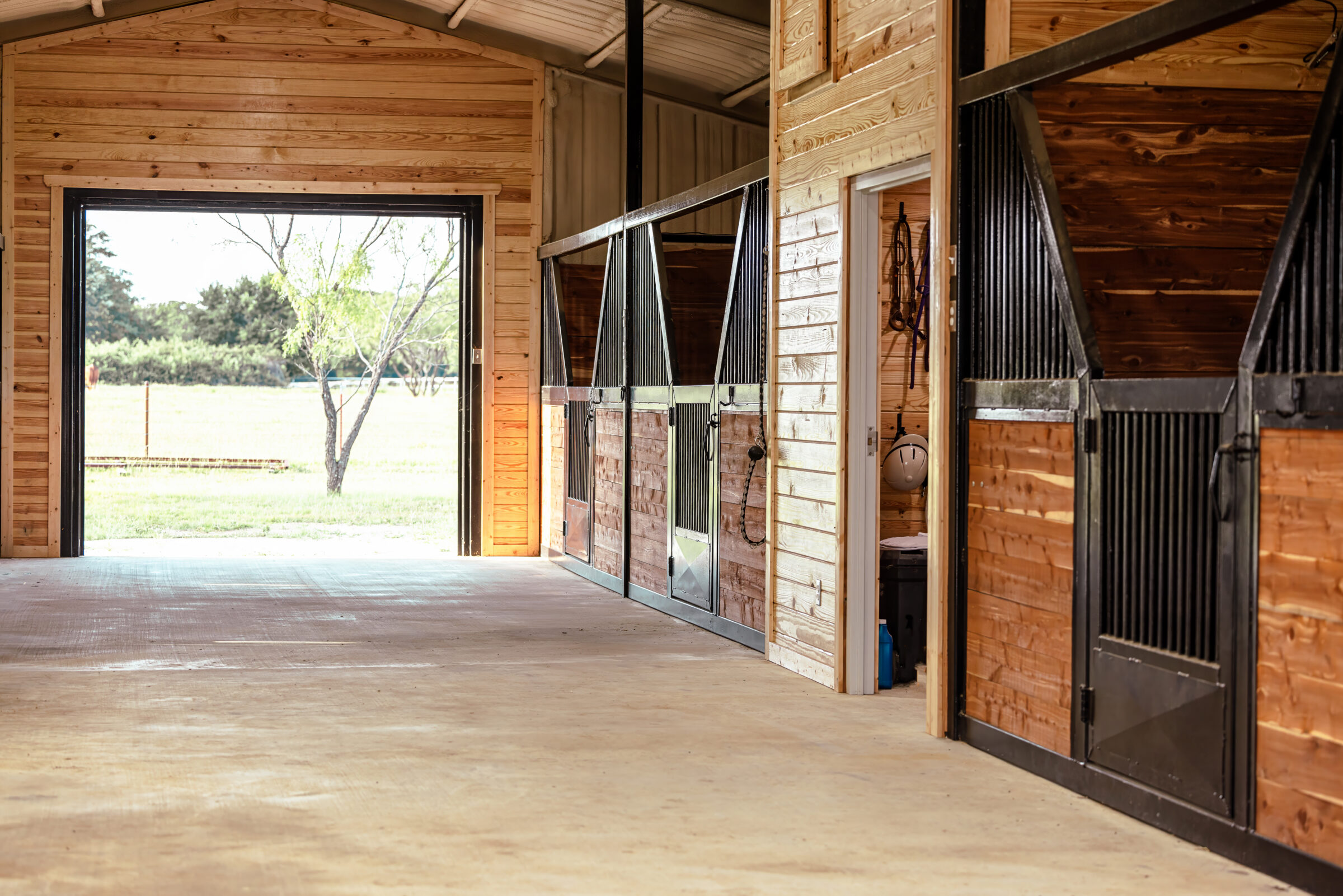
Concrete inside livestock facilities operates under continuous structural demand from the first day of use. The slab must carry concentrated animal weight, resist moisture intrusion, and withstand chemical exposure from organic waste without surface breakdown. Those conditions place stress on the internal paste structure, aggregate bond, and reinforcement system. Designing for agricultural operations requires mix proportions and placement practices that respond directly to how the facility functions each day.
Inside barns and feed alleys, ready mix concrete serves as a structural platform as well as a simple floor surface. Load transfers through the slab into the supporting base with every movement across it. Aggregate grading, reinforcement placement, and controlled water content during batching determine how well that load disperses. When those variables are aligned with site conditions, crack widths remain controlled and surface wear develops gradually instead of concentrating along panel edges.
Managing Repetitive Animal and Equipment Loading
Hoof impact applies force over relatively small bearing areas, particularly where livestock pivot or bunch near gates and feeding lines. That pressure generates tensile stress at slab edges and along joints. A well-proportioned mix with strong aggregate interlock reduces internal shear movement, limiting crack propagation as panels flex. Reinforcement positioned correctly within the slab further restricts vertical displacement when loads repeat in defined travel paths.
Rolling equipment compounds that stress through repeated axle passes across the same corridors. Feed wagons and skid steers create predictable loading lanes that test slab consistency. Uniform thickness and controlled water to cement ratios increase internal density, reducing surface raveling under tire pressure. When supported by a stable base, the slab distributes those forces without excessive corner deflection.
Limiting Moisture Penetration and Chemical Interaction
Moisture migration begins at the surface and moves inward through capillary pores in the cement paste. Lower permeability slows that movement and reduces internal stress during freeze conditions. Ready mix designed with reduced water content and properly entrained air creates microscopic relief spaces that accommodate expansion when trapped water freezes, protecting paste structure from internal fracture.
Organic waste introduces acidic compounds that soften exposed cement paste. Cement blends incorporating supplementary materials reduce chemical penetration and slow surface deterioration in feeding and containment areas. Consolidation during placement strengthens the bond between paste and aggregate at the surface, creating a denser wear layer that resists scaling.
Surface Texture and Wear Control
Surface texture influences both animal stability and abrasion patterns. A slick finish increases slip incidents, while an overly rough texture accelerates wear and traps debris. Controlled brooming or grooving during finishing creates traction without compromising cleanability. Groove orientation aligned with movement paths distributes impact more evenly across the slab surface.
Finishing timing plays a structural role as well. Proper consolidation prior to texturing removes trapped air pockets and strengthens near surface paste density. When finishing practices match mix consistency, the slab maintains structural integrity under scraping and repeated washing cycles.
Joint Layout and Crack Management
Shrinkage and temperature variation generate internal movement as concrete cures and responds to environmental change. Control joints placed at calculated intervals direct cracking into predictable lines, preserving usable surface area. Spacing should correspond with slab thickness and anticipated load intensity to prevent uncontrolled fractures that invite moisture intrusion.
Saw cutting depth and timing influence how effectively joints activate. Sealants formulated for agricultural exposure shield joint edges from chemical contact and water entry, reducing spalling along high traffic lanes. Reinforcement bridging panel sections further limits vertical separation where equipment routinely crosses joints.
Subgrade Stability and Drainage
Structural performance begins below the slab. Soils common to agricultural sites respond to moisture fluctuation with expansion and contraction, creating uneven support. Compacted granular base layers establish uniform bearing conditions, minimizing differential settlement that leads to cracking. Base thickness should reflect equipment weight and soil classification.
Drainage design influences slab stress during freeze cycles. Water accumulation beneath the slab increases pore pressure and weakens support. Proper grading and subsurface drainage move moisture away from the slab footprint, reducing internal stress concentrations under operational load.
Translating Mix Design into Field Results
Concrete in livestock facilities operates under continuous use. That reality places emphasis on batching accuracy, aggregate structure, air content verification, and disciplined curing procedures. Ready mix suppliers experienced in agricultural construction can tailor cement blends and admixture systems to match site specific exposure conditions.
Field execution reinforces those mix decisions. Proper consolidation, controlled finishing, and consistent curing influence crack behavior and surface density long after placement. When formulation and construction practices reflect actual operational demand, slabs maintain structural capacity and surface stability in demanding agricultural environments.
Livestock facilities depend on concrete that responds predictably to load, moisture, and chemical contact. Careful mix selection, calculated joint planning, stable base preparation, and controlled placement form the foundation of that response. Facilities built with these principles remain structurally sound under the constant demands of agricultural production.